





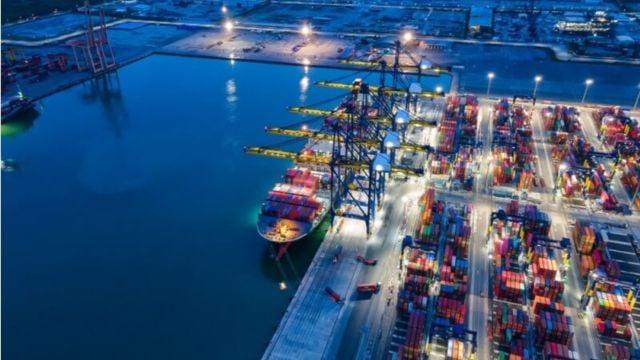
Moving a vehicle from the plant gate to the dealer is a multi-stage network operating under constant pressure for speed and cost control. Logistics teams must shift from reactive coordination to real-time visibility, predictive ETA accuracy, and orchestrated execution across yards, ports, rail, carriers, and dealers, because traditional tools can no longer keep up.

Driving precision: How AI is transforming finished vehicle logistics
- Driving precision: How AI is transforming finished vehicle logistics
Le coût croissant de l'imprécision
In finished vehicle logistics, short delays quickly become expensive. Idle inventory clogs yards, straining space and workflow functions. A missed rail handoff derails downstream deliveries, triggering overtime, premium freight costs, and dissatisfied dealers.
Precision is now the baseline. Logistics teams need to know where every vehicle is across the vehicle logistics network, predict actual arrival times, update them in real time based on changes, and intervene on exceptions before they become costly failures.

Pourquoi les modèles traditionnels peinent
Most operations still run on disconnected systems, and they break down for three main reasons.
First, limited end-to-end visibility means fragmented data obscures issues, such as yard congestion or carrier unavailability, until they escalate into larger disruptions. Second, inefficient coordination occurs when yard, port, rail, and carrier teams work from different data, leaving vehicles sitting ready but unassigned. Third, without predictive insights, teams compensate with extra labor and premium transport, eroding margins over time.
Connecting Transportation Management and Yard Management on a unified platform is what enables AI to drive earlier, smarter action across each of these failure points.
Ce que l’IA change fondamentalement : trois capacités essentielles pour obtenir de meilleurs résultats
Visibilité de bout en bout
Surfaces vehicles at risk of missing departure windows, outlier dwell patterns, and bottlenecks impacting dealer commitments. Rather than waiting for problems to surface through manual reporting, teams gain a live, consolidated picture of network health.
Predictive ETA intelligence
Intelligence continuously analyzes live signals, including traffic, weather, rail delays, yard throughput, and carrier behavior. More accurate ETAs allow teams to adapt sooner and optimize sequencing, which reduces the cascading disruptions that stem from late or inaccurate information.
Exécution orchestrée
Teams can align yard, rail, carrier, and dealer schedules in real time, including proactive vehicle reassignments, dynamic yard sequencing, and automated updates to dealer commitments, all of which reduce decision latency and manual effort.
How AI reduces dwell time
Dwell time is a reliable warning sign of systemic inefficiency, and one of the clearest areas where AI delivers measurable impact in automotive logistics. Teams can catch at-risk vehicles earlier, flag assets likely to get stuck due to lagging processes, and optimize staging to minimize double-handling across the yard. Transport matching also improves, pairing ready vehicles with carriers based on fit, route, and risk profile, rather than availability alone.

The outcome of an AI-powered supply chain
AI's value is measured in results and when logistics teams connect data and act on it faster, four outcomes follow:
- Improved delivery reliability with predictive, real-time insights reducing manual ETA updates, lowering status inquiries, and increasing dealer confidence.
- Protected margins by helping teams avoid premium freight, optimize labor, automate exception management, and reduce costly delays.
- Des décisions plus rapides et plus coordonnées en unifiant les données, en détectant les risques au plus tôt et en connectant les équipes grâce à une vue opérationnelle unique.
- Earlier risk detection, more accurate ETAs, and proactive exception recovery to reduce delays, avoid surprises, and control rising costs.
Driving finished vehicle logistics forward
Finished vehicle logistics doesn't have to be reactive—Blue Yonder connects planning and execution on one platform to give your team the visibility, predictive ETAs, and orchestration needed to keep vehicles moving from plant to dealer, bringing precision to your network.

